Drain Cleaning Service · Centennial
Eliminating and Avoiding Kitchen Drain Grease Buildup in Centennial Properties
By , · Published August 31, 2026 · 1,813 words
The short answer
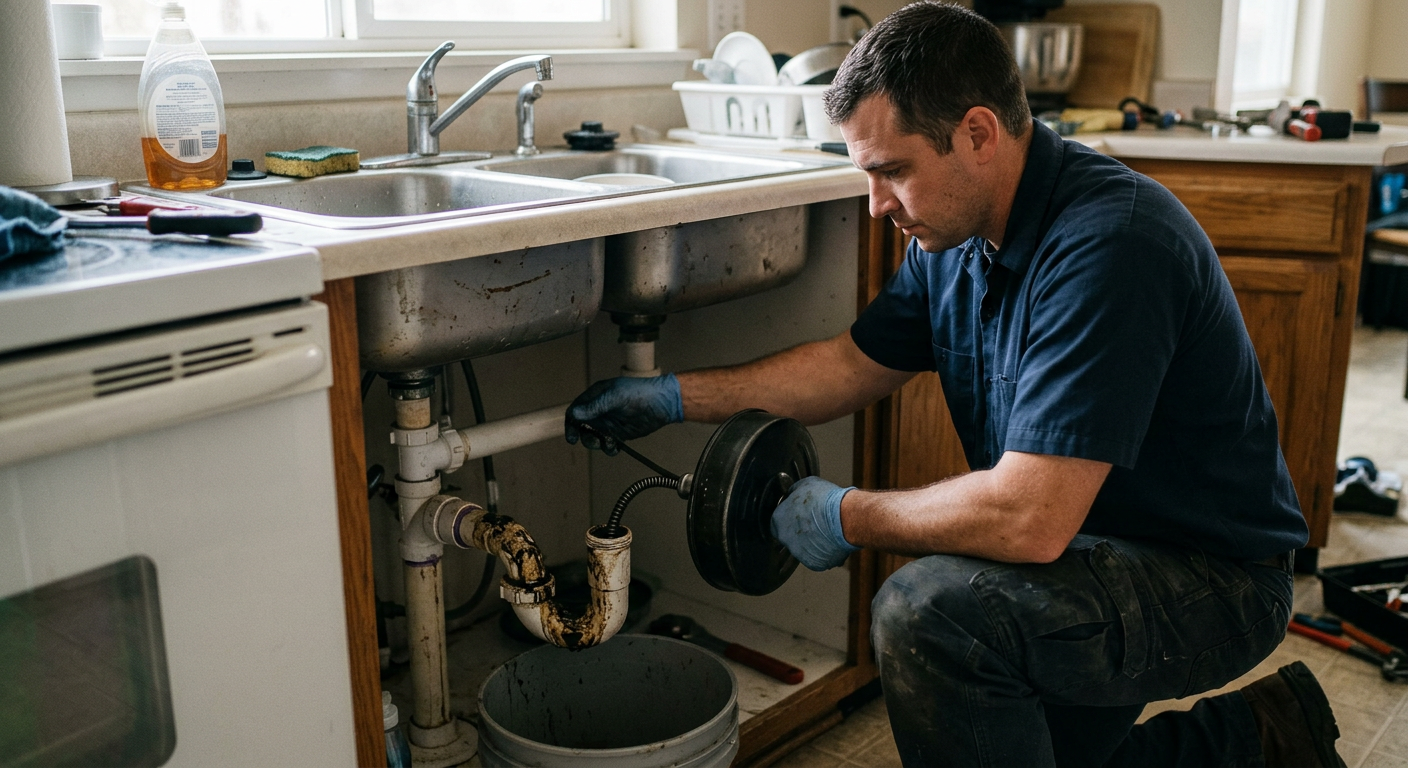
Kitchen drain grease buildup occurs when warm fats, oils, and grease enter sink piping, cool against pipe walls, and solidify into hardened deposits that trap food particles. Preventing severe blockages requires scraping plates into trash bins, avoiding liquid fat disposal in sinks, and scheduling mechanical drain cleaning service when kitchen branch lines begin draining slowly.
Key takeaways
- Fats, oils, and grease coat the inner perimeter of kitchen branch lines and gradually reduce pipe diameter.
- Cold Front Range soil and uninsulated crawl spaces in Centennial accelerate grease solidification inside underground and under-slab plumbing.
- Chemical drain cleaners melt grease temporarily, allowing it to migrate deeper into the sewer lateral before re-solidifying into a harder blockage.
- Mechanical drain cleaning service using specialized cutting blades physically shears hardened grease off interior pipe walls.
- Dry-wiping cookware with paper towels before washing prevents the vast majority of kitchen line grease accumulation.
Dealing with persistent kitchen drain grease buildup requires understanding how liquid cooking residues interact with residential plumbing infrastructure over time. When hot oils, animal fats, and buttery sauces get rinsed down kitchen sinks in Centennial homes, they do not remain suspended in wastewater. Instead, they cool rapidly, bind to mineral deposits on pipe walls, and construct layered, waxy dams that choke off wastewater flow. Left unchecked, these restrictions cause foul sewer odors, slow drainage, and total pipeline blockages that disrupt household routines.
How Fats, Oils, and Grease Solidify Inside Kitchen Plumbing Lines
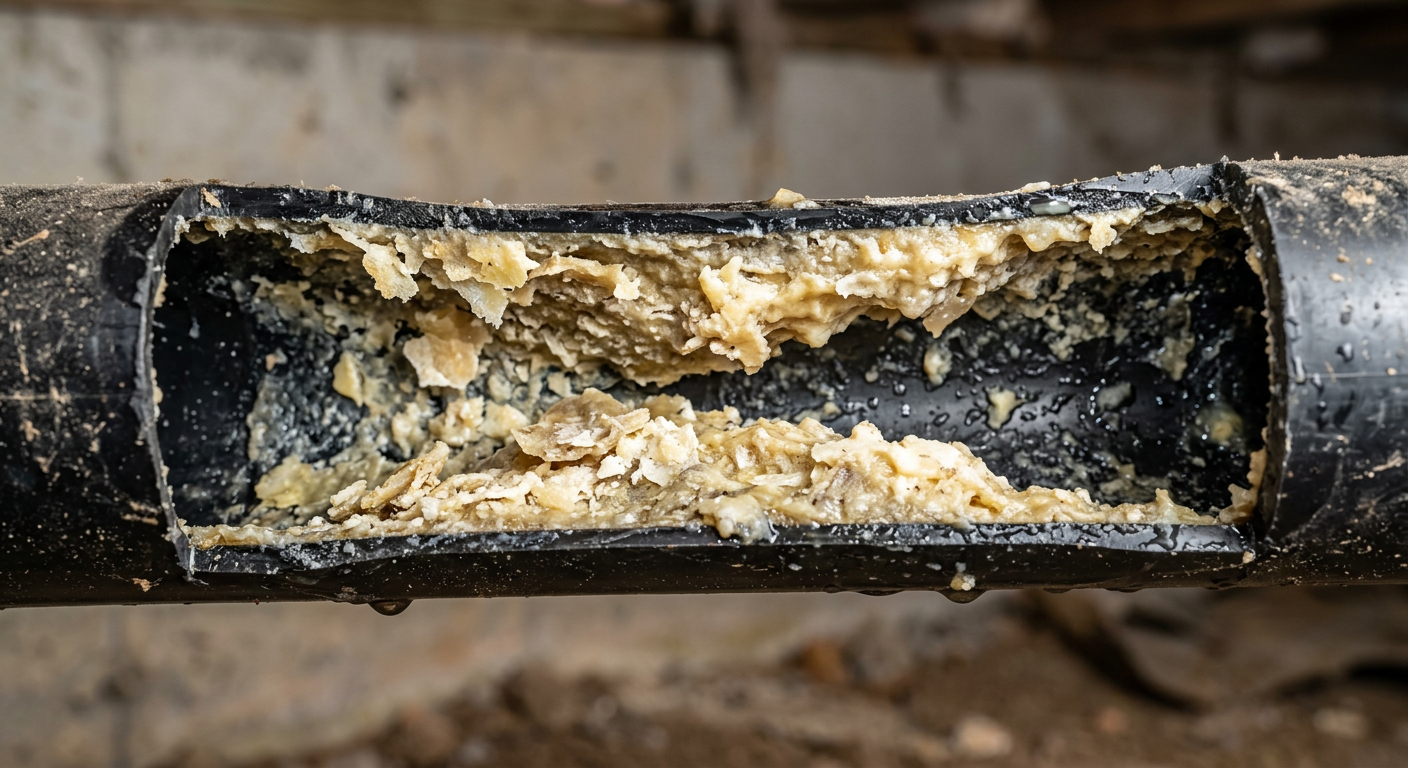
Fats, oils, and grease solidify inside kitchen plumbing lines through a continuous cooling and saponification process that bonds lipid molecules to interior pipe surfaces. When warm wastewater carrying melted fats travels through a 1.5-inch or 2-inch kitchen branch drain, the pipe wall absorbs the thermal energy of the water. As the temperature drops below the melting point of animal fats (typically between 95°F and 115°F), the lipids congeal against the pipe invert and crown.
Over several months, this waxy layer collects insoluble food debris, eggshells, coffee grounds, and soap scum. The combination creates a hard, dense composite known in the plumbing trade as lipid scale. Unlike loose organic clogs that shift with water pressure, hardened grease forms a structural sleeve inside the pipe, shrinking the effective internal diameter until normal kitchen discharge can no longer pass through.
Why Ground Temperature Drops in Arapahoe County Harden Drainage Grease
Sub-surface soil temperatures across Centennial and Arapahoe County drop significantly during winter months, causing kitchen waste pipes in slabs, basements, and crawl spaces to act as rapid thermal conductors. When kitchen drains run along exterior foundation walls or beneath unheated crawl spaces common in Centennial neighborhoods like Southglenn and Foxfield, the pipe walls maintain a cold baseline temperature.
When hot rinse water hits these chilled conduits, the thermal drop occurs within seconds rather than several minutes. This rapid chilling causes cooking fats to precipitate out of suspension almost immediately past the P-trap, concentrating grease accumulation in the first six to ten feet of the horizontal drain branch. For homes connected to longer lateral runs, readers can consult our main sewer cleaning frequency guide to understand how lateral distance impacts sediment and grease settlement.
Practical Daily Protocols to Stop Grease Before It Enters the Sink
Preventing grease accumulation begins with physical interception protocols at the countertop before any dishware or cookware touches running water. Centennial homeowners can eliminate the vast majority of drain restrictions by treating kitchen sinks as fluid disposal points rather than organic waste chutes.
Scraping plates and wiping cookware prior to washing
Wiping oily pans and plates with dry paper towels before washing removes up to ninety percent of residual fats before they enter the plumbing network. Skillets, baking sheets, and roasting pans should be allowed to cool, scraped with a silicone spatula into a solid trash receptacle, and thoroughly wiped down. This simple mechanical barrier ensures that dish detergents only have to manage microscopic surface films rather than bulk lipid volumes.
Managing dairy, dressings, and residual cooking fats safely
Liquid fats such as salad dressings, mayonnaise, cream sauces, and deep-frying oils should be collected in dedicated metal or glass containers for solid waste disposal. Pouring liquid frying oils into sealable tin cans or glass jars allows the material to cool safely for curb disposal. Even water-soluble culinary emulsions break down once inside drain lines, allowing free fatty acids to separate and bind to older cast iron or plastic walls.
| Kitchen Material | Physical Behavior in Cold Pipes | Plumbing Impact Risk | Proper Disposal Method |
|---|---|---|---|
| Bacon Grease / Lard | Solidifies rapidly into dense white paste | Extremely High | Can or jar disposal in trash |
| Olive / Vegetable Oil | Thickens into viscous film, traps debris | Moderate to High | Paper towel wipe or sealed container |
| Dairy & Heavy Cream | Curdles, separates, and coats pipe crowns | Moderate | Trash or small-volume trash absorption |
| Coffee Grounds | Embeds directly into grease paste layers | Severe when combined | Compost or municipal green waste |
| Salad Dressings | Emulsions break, depositing free oils | Moderate | Scrape into trash with food scraps |
The Mechanics of Kitchen Drain Grease Buildup Removal
Eliminating advanced kitchen drain grease buildup requires specialized mechanical drain cleaning tools capable of scouring the pipe circumference without cracking older structural fittings. Because solidified grease possesses high elasticity, light-duty homeowner equipment often pushes a narrow hole through the blockage without removing the circumferential mass, causing the clog to seal shut again within days.
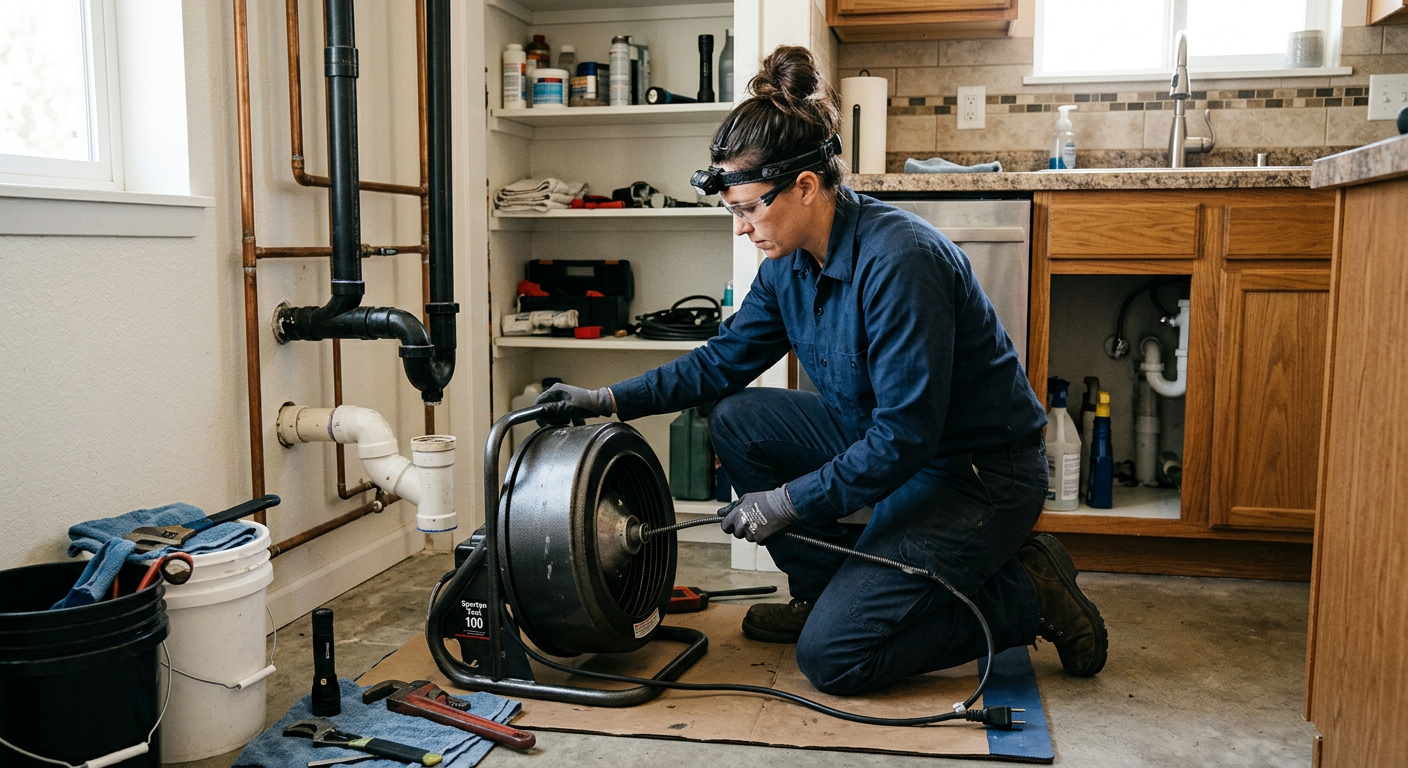
Professional drain cleaning service technicians deploy heavy-duty continuous steel cables fitted with specialized expanding grease cutters or dual-blade heads. As the cable rotates inside the 2-inch pipe, the blades expand against the inner walls, physically slicing the waxy scale into small fragments that flush harmlessly into the larger municipal sewer main. For extensive collections of practical drain maintenance resources, visit our drain maintenance articles library.
Why Caustic Chemical Cleaners Fail to Dissolve Congealed Fat Masses
Caustic chemical drain openers fail on congealed grease because they generate brief, localized exothermic heat that melts a narrow bypass channel through the center while leaving the bulk mass intact. Once the chemical solution washes downstream, the surrounding pipe cools immediately, and the remaining melted grease pools behind the obstruction, re-solidifying into an even denser plug.
Furthermore, chemical cleaners containing sulfuric acid or sodium hydroxide introduce severe structural risks to residential plumbing systems: Commercial drain solutions and residential rooter service technicians frequently encounter pipes damaged by repeated chemical applications.
- Chemical overheating can soften and warp thin-walled residential PVC and ABS plastic fittings.
- Acidic mixtures accelerate the corrosion and pitting of older cast iron and galvanized steel branch pipes.
- Caustic liquids remain trapped behind standing water clogs, creating dangerous chemical splashback risks for technicians performing mechanical rooter service.
- Toxic chemical fumes can penetrate air gaps and vent pipes, degrading indoor air quality throughout the residence.
Professional Kitchen Drain Cleaning Methods Used by Service Technicians
Professional drain cleaning service for grease-choked kitchen lines involves structured diagnostic evaluation followed by mechanical cable clearing or specialized rooter service. When a technician arrives at a Centennial home experiencing kitchen drainage failure, the process follows a methodical sequence designed to protect interior finishes while restoring complete pipeline capacity.
- Access point selection: The technician identifies the primary cleanout fitting under the sink, in a basement utility room, or on an exterior wall to avoid bringing dirty cables through living areas.
- Trap inspection: Disassembling the tubular P-trap verifies whether the blockage is isolated to the fixture connection or resides deep inside the concealed wall stack.
- Rotary cable clearing: A motorized drum machine drives a flexible inner-core steel cable equipped with spade or drop-head grease cutters through the line, slicing through lipid deposits along the entire horizontal run.
- High-volume flushing: Once the cable pierces the main obstruction, continuous hot water flushing carries shaved grease particulates out to the main sewer line without redepositing.
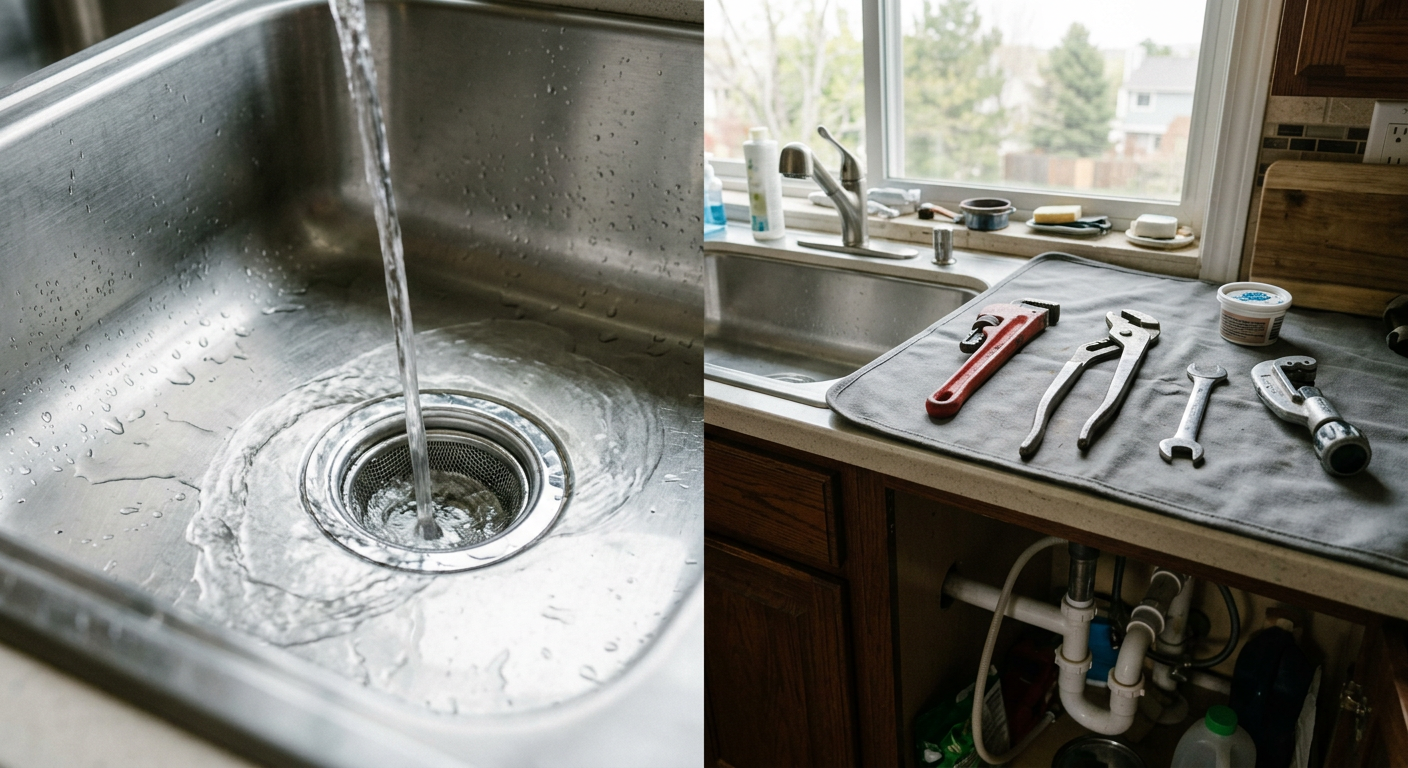
- Flow testing: The technician runs high-volume water from the kitchen fixture under full pressure to confirm rapid, vortex drainage and verify leak-free trap connections.
Step-by-Step Maintenance Routine for Clear Kitchen Waste Lines
Establishing a routine maintenance cycle keeps Centennial kitchen plumbing running at maximum velocity and prevents emergency service calls during holiday cooking periods. Consistent homeowner care combined with scheduled professional drain cleaning service prevents minor fatty films from maturing into rock-hard obstructions.
Every week, flush the kitchen sink with warm tap water for two to three minutes while running the garbage disposal to ensure no residual food pulp clings to the pipe invert. Every month, clean the disposal grinding chamber with ice cubes and coarse rock salt to mechanically scour the disposal impellers and dislodge internal grease rings. Avoid putting fibrous vegetables, potato peels, and stringy celery down the disposal, as these items create structural webs that readily capture microscopic grease droplets.
Developing a Long-Term Strategy Against Kitchen Drain Obstructions
Protecting your plumbing network from kitchen drain grease buildup requires continuous awareness of what enters your waste lines alongside periodic professional drain cleaning service. By stopping cooking oils at the countertop, avoiding harsh chemical cleaners, and scheduling routine mechanical cabling when slow drainage first appears, Centennial homeowners can ensure trouble-free drainage throughout every season.
Frequently asked questions
- Can boiling water wash away kitchen drain grease buildup?
- Boiling water only liquefies grease near the sink trap, pushing it several feet down the waste pipe where the water cools and the grease hardens against colder pipe walls, often creating a deeper and more compact obstruction.
- Why do commercial chemical drain cleaners fail on hardened grease?
- Caustic chemical cleaners generate brief heat and chemical reactions that burn a small hole through the center of a grease blockage without stripping the thick grease mass from the pipe circumference, leaving the line vulnerable to immediate re-clogging.
- How often should a residential kitchen drain line receive professional cleaning?
- Most single-family homes benefit from professional mechanical drain cleaning every two to three years, though households that cook frequently with animal fats or cooking oils may require annual service to prevent line closure.
- What is the difference between an isolated sink clog and a main sewer backup?
- An isolated sink clog only causes standing water in the kitchen basin, whereas a main sewer blockage causes simultaneous drainage failure across multiple lower-level fixtures, such as basement floor drains and toilets.
Talk to
Describe what you're seeing and we'll tell you what the next step looks like.
Keep reading
Hydro Jetting vs Snaking a Main Drain: Centennial Comparison and Cost Expectations
Evaluate the technical capabilities and cost differences between hydro jetting and mechanical snaking for clearing stubborn main sewer obstructions in Centennial homes and commercial properties.
Kitchen Drain Grease Buildup: Centennial Prevention and Maintenance Guide
Discover how kitchen drain grease buildup forms in residential plumbing, why Colorado ground temperatures worsen pipe deposits, and practical prevention steps to maintain free-flowing waste lines in Centennial.
How Often Should a Main Line Be Cleaned? Aurora Sewer Line Cleaning Guide
Discover the ideal sewer main line cleaning frequency for Aurora homes and businesses, factoring in pipe age, mature trees, Front Range soils, and heavy waste demands.